.JPEG)
- The US went from crypto's biggest obstacle to its loudest champion in 2025 with the GENIUS Act
- The same administration that passed landmark stablecoin legislation also crashed Bitcoin twice with tariffs
- The playing field between MiCA and the GENIUS Act has levelled more than most people realize
- Crypto prices are still at the mercy of macro conditions that have nothing to do with blockchain, and 2025 proved it
- Regulatory clarity and market volatility arrived at exactly the same time, here is what that means for European crypto investors and professionals in 2026
Introduction
A little over a year ago, the story was clear. Crypto was leaving the United States. Years of regulatory hostility under the SEC and a general atmosphere of institutional uncertainty had pushed entrepreneurs and innovation toward Europe and beyond. In fact, we wrote about it right here. The EU, with MiCA finally taking shape, seemed to be the regulatory framework the crypto industry had been waiting for, and the US seemed all but content to let it all go.
Then, Donald Trump won a second term and the entire picture shifted.
From Gensler Out to GENIUS In
On inauguration day, January 20 2025, SEC Chair Gary Gensler resigned and in doing so ended an era that the crypto industry had spent years fighting against. Gensler's SEC was defined by what critics called regulation by enforcement, which is the practice of using lawsuits and legal action as a substitute for clear written rules. Coinbase, Ripple, and dozens of others had spent years in legal limbo as a result of this approach and it was one of the main reasons so many crypto businesses had been eyeing cities like Amsterdam, Paris, and Dubai over New York.
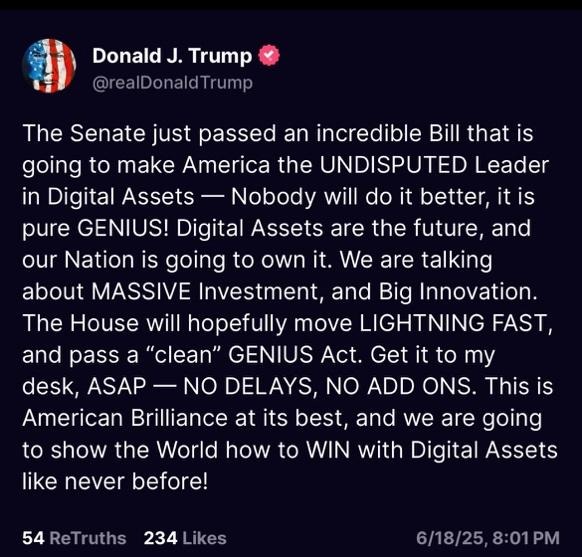
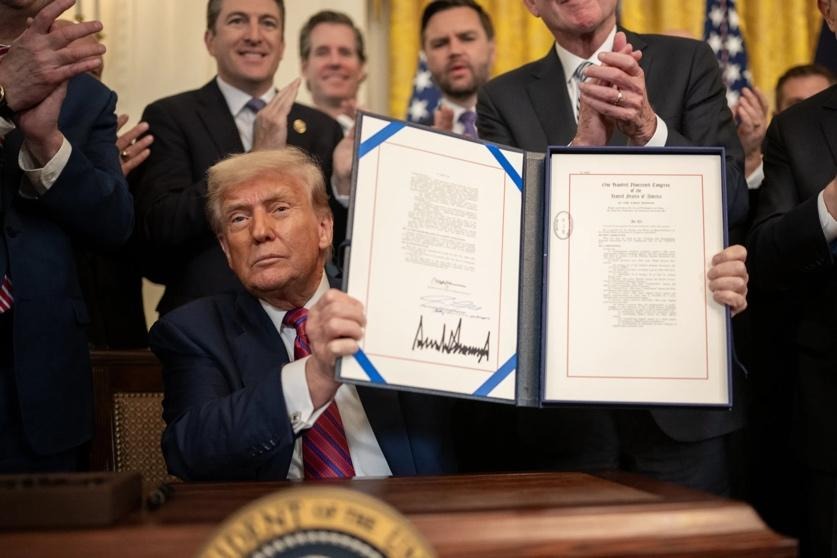
Within days of taking office, Trump signed an executive order directing federal agencies to treat crypto development as a national priority. The legislative follow-through came in July 2025 during what Congress dubbed "Crypto Week." On July 18, Trump signed the GENIUS Act into law, making it the first ever piece of major federal US legislation specifically governing digital assets. The act establishes a regulatory framework for payment stablecoins, requiring 1:1 reserve backing with US dollars or short-term Treasuries, mandatory AML compliance, and monthly public disclosure of reserves for all issuers.
The same week, the House also passed the CLARITY Act, a broader piece of legislation that attempts to draw a clearer line between which digital assets fall under the SEC and which fall under the CFTC. As of writing it is still working its way through the Senate, but its passage in the House was seen as a strong signal of where US digital asset policy is heading overall.
Together these developments represent something the crypto industry had been asking for for years which is not necessarily a light touch, but a clear and written one. Businesses can now make regulatory decisions based on rules that actually exist—surprise!—rather than on mere predictions about how the SEC might act next.
The Hand That Giveth, The Hand That Taketh Away
Here is where the story gets quite complicated. The same administration that delivered regulatory clarity also launched a global trade war. And crypto, as it turns out, was not immune to it.
Bitcoin hit a high of approximately $109,000 in January 2025. By early April, after Trump announced sweeping reciprocal tariffs targeting over 185 countries in what his administration called "Liberation Day," Bitcoin had fallen to a low of $74,700 and the broader crypto market had wiped out roughly 9% of its total market cap within days. When Trump then announced a 90-day pause on some of those tariffs on April 9, Bitcoin recovered to around $82,000 within the week, but the pattern had already been set. Tariff announcement, crash, partial reversal, partial recovery, and then repeat.
By October 2025, Bitcoin hit a new all-time high of over $124,000. Then four days later, Trump threatened 100% tariffs on Chinese imports and Bitcoin dropped from around $122,500 to approximately $104,600 within 24 hours. The crash generated a record $19 billion in liquidations. As of March 2026, Bitcoin is sitting above $70,000, still well below its 2025 peak and is still subject to swings driven more by trade policy headlines than by anything happening within the crypto ecosystem itself.
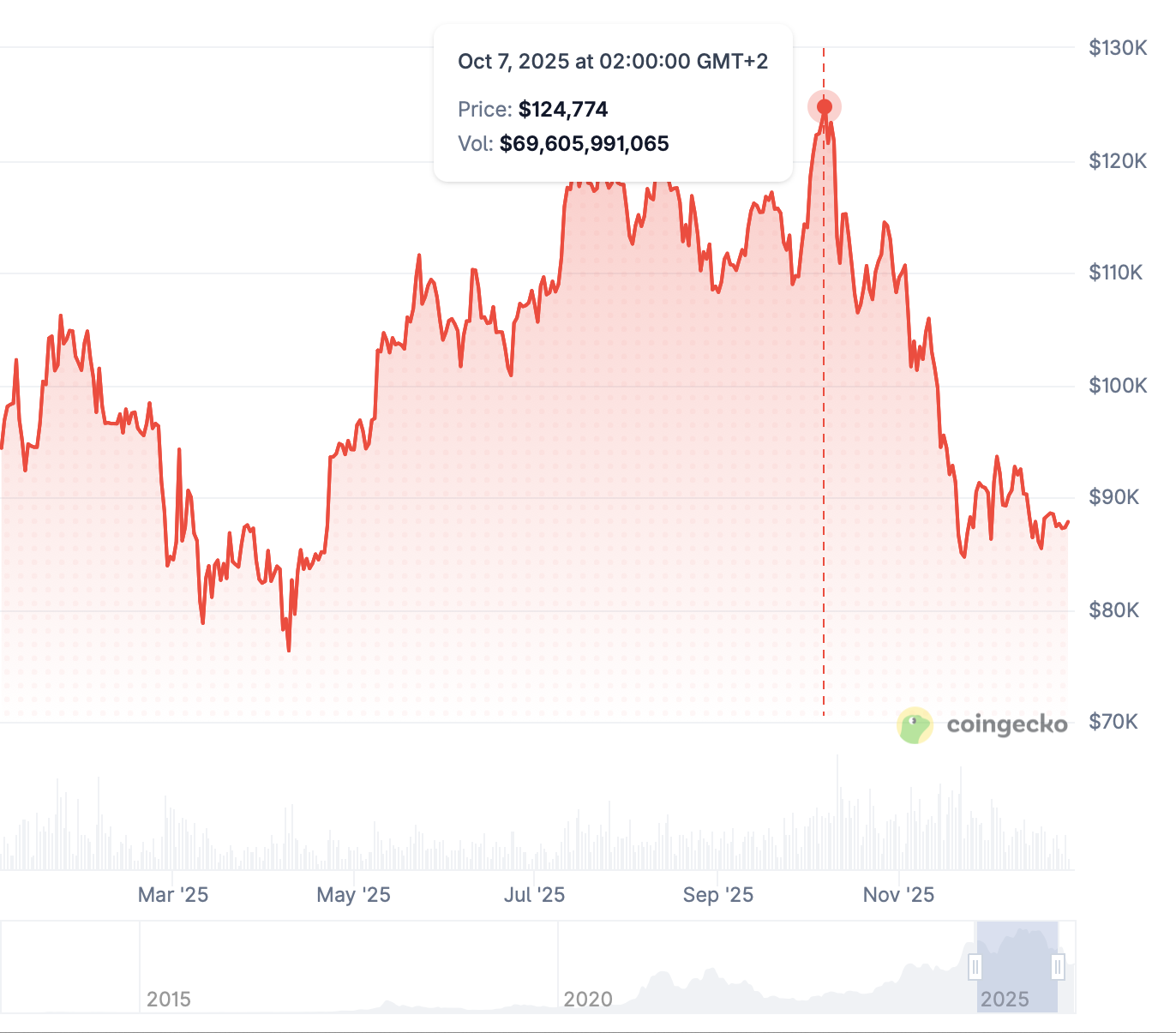
What this showed, perhaps uncomfortably, is that Bitcoin is still behaving like a risk asset rather than a safe haven. When investors face uncertainty in equity markets, crypto is often one of the first things they sell given that it is highly liquid and often highly leveraged. That framing is important for businesses and investors trying to plan around digital assets, as regulatory clarity and market volatility are now two separate questions that consequently need to be treated separately.

MiCA vs. the GENIUS Act: Has the Playing Field Levelled?
When we wrote about crypto leaving the US in 2024, one of the core arguments was that MiCA offered something the US simply did not, which was regulatory certainty. You could build a compliant crypto business in the EU and know what the rules were. That advantage has not totally disappeared, but it has narrowed, and we know it’s not the same as it was.
MiCA came into force fully in December 2024 and the GENIUS Act was signed into law in July 2025. Both frameworks require stablecoin issuers to maintain 1:1 reserves in liquid assets and both impose AML and consumer protection obligations, and in that sense the two frameworks are more similar than different. A business navigating one will find the other relatively familiar in terms of its underlying logic.
That said, there are meaningful differences worth noting. MiCA applies across all 27 EU member states with passporting rights, meaning that authorization in one country gives a business access to the entire EU market. The GENIUS Act has a dual federal and state supervisory model where issuers below $10 billion in outstanding issuance can opt for state-level regulation rather than federal oversight. For larger cross-border operations the EU's single passport arguably remains the more administratively straightforward option and this is still a meaningful advantage for businesses that are primarily serving European customers or operating within the single market.
The picture is more complicated for businesses operating at a global scale though. USD-denominated stablecoins continue to dominate global stablecoin market share by a significant margin and stablecoin transaction volumes surpassed those of Visa and Mastercard combined in 2024, which means that regardless of where a business is incorporated, GENIUS Act compliance is becoming harder and harder to ignore. European businesses issuing or handling USD stablecoins will need to engage with the GENIUS Act's requirements around foreign issuers, which include registering with the OCC (the American federal body that oversees national banks and financial institutions) and holding reserves sufficient to meet the liquidity demands of the US’ customers specifically.
So, is the EU still the better jurisdiction? In true legal fashion, the answer is: it depends! Here is what it actually depends on. If regulatory predictability and EU single market access are your priority, MiCA is still your best bet. For access to US capital markets, US institutional investors, and the world's dominant stablecoin currency, the GENIUS Act has made the US a more legible and more viable jurisdiction than it has been in many years and that matters for how European businesses think about where they want to operate and grow.

The Bottom Line for European Crypto Professionals, Investors, and Businesses in 2026
The headline version of the last 14 months is that the most pro-crypto administration in US history and the most disruptive macro environment in recent memory arrived at the same time. The GENIUS Act and the CLARITY Act represent genuine and durable progress on the regulatory transparency question. Simultaneously, the trade war has shown that crypto prices remain deeply sensitive to macro conditions that have nothing in particular to do with blockchain technology, adoption rates, or legislation.
For compliance professionals and businesses operating across the EU and US markets, the practical implication is that the regulatory question and the market risk question now need to be treated as two separate things. A compliant structure under MiCA or the GENIUS Act does not protect a business from the volatility that arrives when tariff announcements affect investors’ risk appetites. Anyone holding or investing in digital assets should account for both variables.
If you are trying to figure out where your business stands in all of this, whether that is your obligations under MiCA, how the GENIUS Act affects your stablecoin compliance, or your cross-border tax position, that is exactly what we help with at O2K. Get in touch or book a consultation, we can take it from there.
.svg)



.jpg)

.jpg)

.jpg)


.png)
.jpg)
.jpg)

.jpg)

.jpg)
.png)
.jpg)
%20(1).jpg)

.png)




.jpg)

.jpg)
.jpg)

.png)

.png)






.png)













.jpeg)







.jpg)