- Europe has plenty of savings but struggles to turn them into productive investment.
- Much of the capital that reaches markets ends up funding US companies instead of European ones.
- Companies face a major funding gap when they try to scale.
- Some EU regulations meant to protect savers limit investment in higher growth assets.
- Tax incentives alone are not enough. Structural reforms and more active policy direction are likely needed.
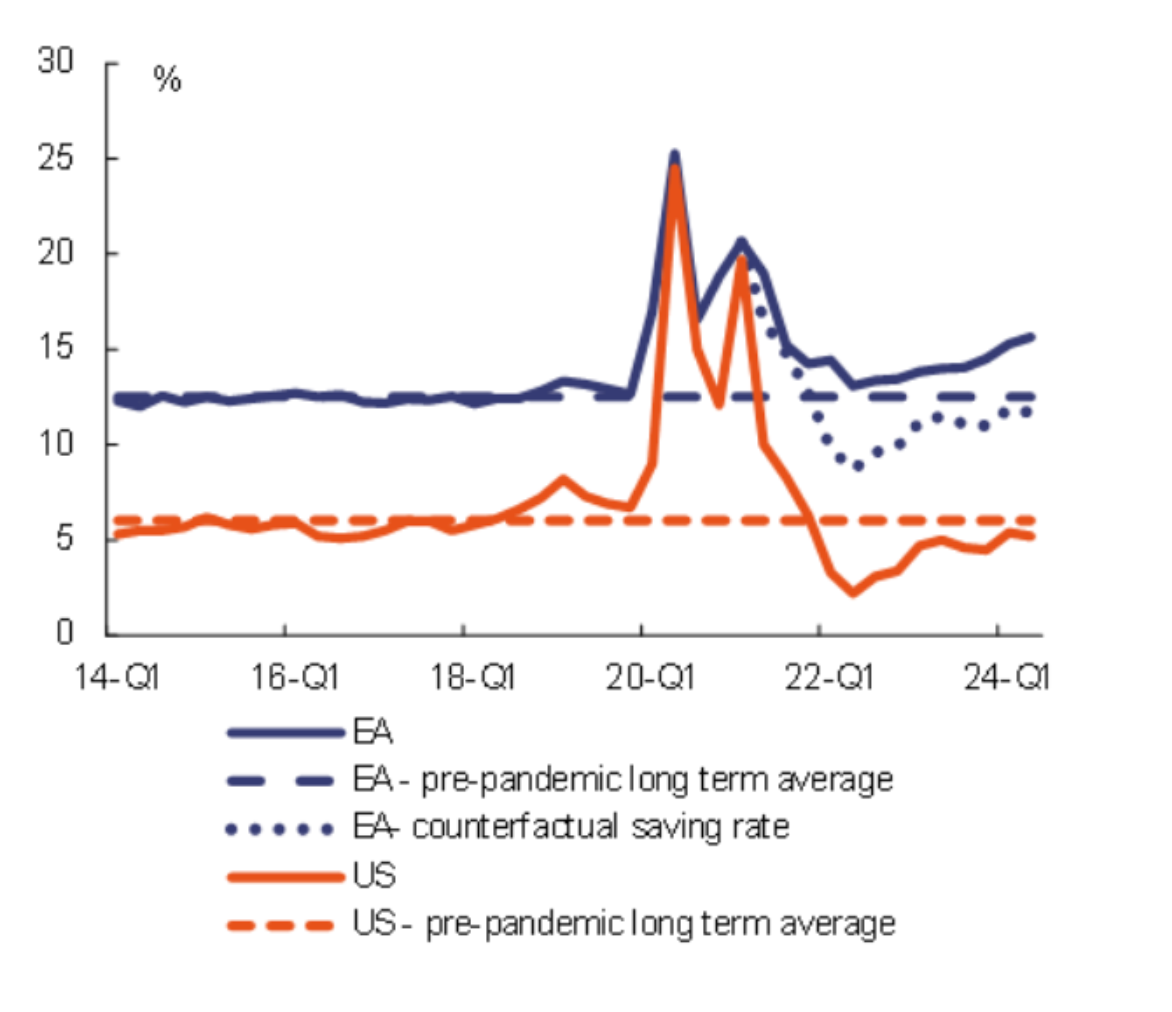
European households save roughly 15% of what they earn, about three times the rate of American households. Altogether, that amounts to around €35 trillion held in European bank accounts and financial products. Yet Europe's most promising young companies keep moving to the United States to find funding, and a major report by former ECB President Mario Draghi warns the continent needs an extra €800 billion a year in investment just to stay competitive.
So if Europe has the money, why does it have an investment problem? That was the central question of Panel 4 at the 2026 EU Tax Symposium in Brussels, and the answers were surprising.
What Was This Panel About?
Panel 4, the last substantive discussion of the symposium, tackled a question with enormous stakes: "How can taxation boost the Savings and Investment Union?" The Savings and Investment Union (SIU) is the European Commission's ambitious plan to build a financing ecosystem that connects European savings with productive investments.
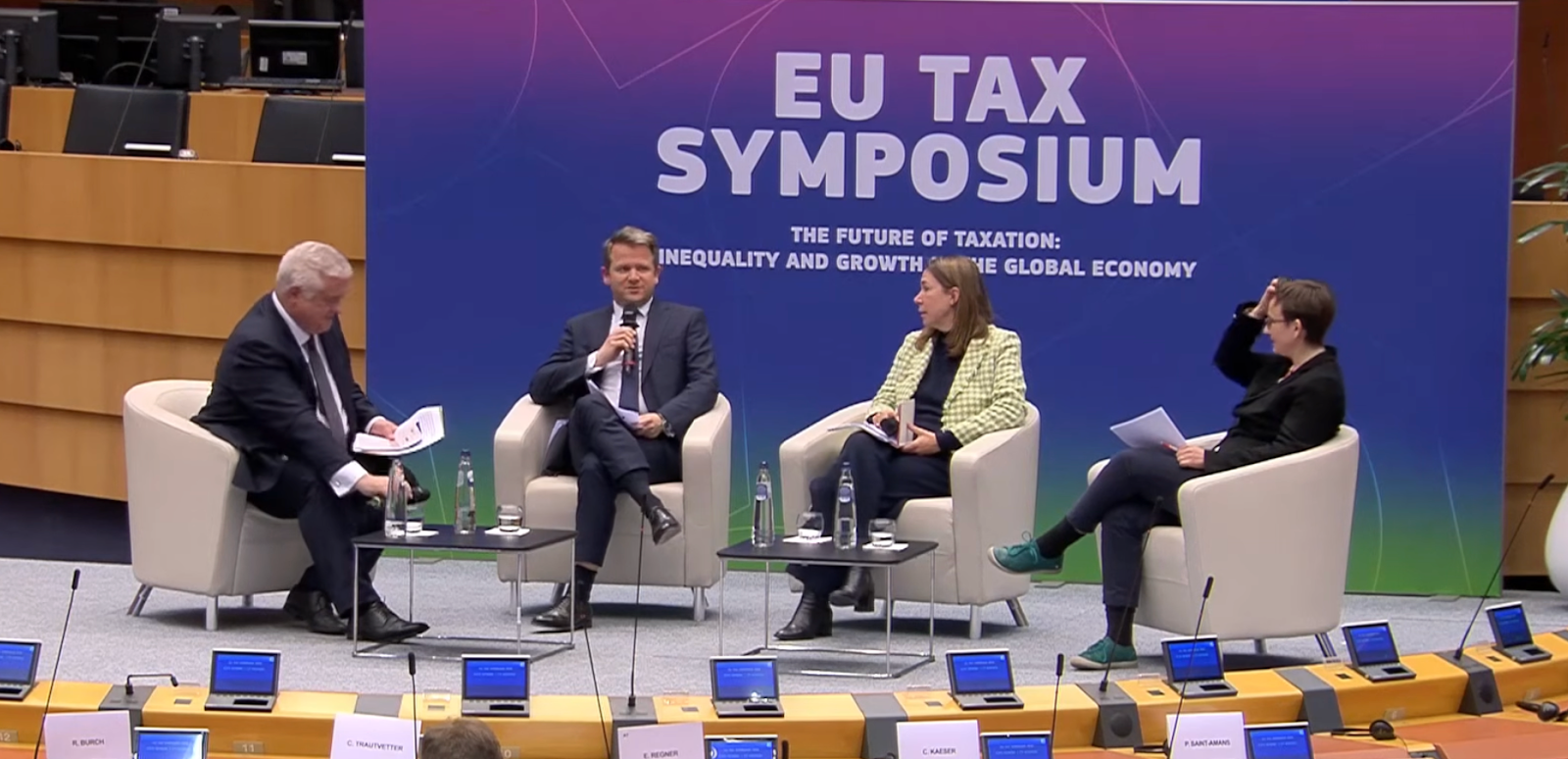
The panel was moderated by Martin Bresson, Public Affairs Director at Invest Europe, and featured three distinct perspectives:
- Daniela Gabor, Professor of Economics at the University of London
- Debora Revoltella, Chief Economist at the European Investment Bank
- Jörg Asmussen, a representative of the German Insurance Association (GDV), Europe's largest insurance industry body, which manages approximately €1.9 trillion in investments and channels €200-300 billion into new investments each year.
The Savings Fallacy: Europe's Real Problem Is Investable Projects
Daniela Gabor opened with what she described as a deliberately provocative thesis. She identified two fallacies at the core of the SIU plans, and her argument reframed the entire conversation.
The first was what she called the savings fallacy. The standard narrative is that European savings are "trapped" in bank deposits and just need to be redirected toward stock markets and investment funds. She argued this is wrong. Citing European Central Bank research, she pointed out that Europe's financial institutions already hold more assets relative to their economies' sizes than their American counterparts. The capital is there. What Europe actually lacks, she argued, is a sufficient pipeline of high-quality, investable projects.
Her second concern, the investment fallacy, followed logically. The assumption that fixing savings automatically fixes investment ignores what actually happens when European money enters equity markets. In practice, open-ended equity funds in the eurozone disproportionately invest in US equities, particularly big tech, rather than in European companies. More savings flowing into capital markets could simply mean more European money funding American innovation.
The Scale-Up Gap: Where Good Ideas Go to Stall
Debora Revoltella agreed that Europe has plenty of savings. She also pushed back on the idea that Europe lacks innovation. The continent has strong universities, a healthy startup ecosystem, and genuinely competitive industries.
The real problem emerges when a young company tries to grow beyond the early stage. The EIB calls this the scale-up gap: the point at which European funding dries up and companies either stall, are acquired by foreign buyers, or leave. She estimated the gap at around €70 billion per year.
She identified institutional investors, pension funds, and insurers as a key part of the solution. These players tend to hold less equity than their global peers, and when they do invest in equities, they lean heavily toward either domestic markets or US assets. Getting them to invest more at the European scale-up stage, cross-border and with more appetite for risk, is one of the SIU's most critical objectives.
Revoltella also shared a striking finding from the EIB's annual survey of European businesses: employees dedicated solely to compliance and bureaucracy cost European firms about 2% of total revenue. And when companies exporting to another EU country were asked whether they experienced barriers, 60% said yes. The single market, she implied, is still too fragmented for capital to flow freely.
The Insurance Perspective: Savings, Pensions, and Policy Mismatch
The GDV representative brought the perspective of a sector that sits at the very center of the savings-to-investment chain. German insurers paid out roughly €102 billion in retirement savings in 2024 across 85 million life insurance policies. He described the industry as a “transmission belt”, collecting savings from households over decades and converting them into long-term investments and retirement income.
His key argument on tax policy was a subtle but important distinction. Rather than using tax incentives to steer people toward specific investments, it is more effective to incentivise saving into long-term products that then invest on the saver's behalf. In other words, encourage people to save for retirement through products designed to channel money into infrastructure, venture capital, and other productive assets.
He also pushed back firmly against what he called the “Americanization of pensions.” Europe's social pension systems reflect a deep cultural commitment to solidarity and shared risk. Demographic pressures such as aging populations and slowing productivity are real, but the answer is not to abandon pay-as-you-go pensions in favour of a US-style system in which individuals bear all market risk.
His sharpest criticism was aimed at a specific EU proposal: the Pan-European Pension Product (PEPP). This product was designed to encourage cross-border retirement savings, but its rules require that 95% of investments be allocated to low-risk, non-complex assets. That effectively rules out the infrastructure projects, venture investments, and alternative assets that the SIU is specifically trying to finance. The regulation, in other words, contradicts the goal.
The Audience Pushes Back: What About the Little Guy?
The floor questions sharpened the debate considerably. A Portuguese parliamentarian delivered the most pointed challenge of the afternoon. Banks, he noted, earn profits from ECB deposits while charging high fees and paying low interest to savers. Capital markets firms extract economic rents. “And then you're telling us that we have to subsidize private pensions through tax benefits?” he asked. His point resonated because it captured a tension at the heart of the entire debate. The SIU might help improve Europe's financial architecture, but will ordinary citizens actually benefit? Or will the main winners be the banks and asset managers sitting in the middle?
Other participants raised concerns about withholding taxes, which increase the cost and complexity when investment income crosses borders. These taxes make it harder and more expensive to invest across European countries, which is exactly the kind of friction the SIU is supposed to reduce. Several participants called for the EU's reform initiative on this (called FASTER) to be brought forward from 2030 to 2028.
A Greek delegate who had studied VAT for 41 years offered a blunt proposal, the EU's VAT gap from carousel fraud alone exceeds €100 billion. Close that gap, he argued, and there would be less need for new taxes altogether.
A Final Warning
Daniela Gabor closed the debate with a broader warning. Years of offering incentives to investors and companies, what she called “carrots,” have failed to produce the strategic investment Europe needs. She argued for a more hands-on approach: using industrial policy and direct lending to steer money toward European priorities, similar to what the UK is beginning to do with its pension funds.
She also flagged two risks. First, pushing household savings into complex, illiquid financial products, such as the private credit markets, is currently causing problems for US investors and could end badly for European savers. Second, she warned that some actors are using the SIU agenda to push for the privatisation of Europe's pension systems, shrinking public pensions in favour of market-dependent alternatives. She added:
“If we start to save like Americans for retirement, we might have to live like Americans.”
Takeaway: Fix the System, Not Just the Incentives
The clearest takeaway from Panel 4 was the level of agreement. Despite coming from academia, a public investment bank, and the insurance industry, all three speakers shared the same diagnosis: Europe does not lack savings. The problem is what happens to them.
Revoltella pointed to the chokepoint—a €70 billion annual scale-up gap where promising European companies lose access to funding. The GDV representative showed how existing regulations prevent institutional investors from filling that gap. Gabor went further, arguing that without deliberate steering, European savings will continue to flow into American markets rather than support European growth.
For tax policy, the implications are straightforward. Incentives can encourage long-term saving, but they will not close the investment gap on their own. Reducing the frictions that hinder cross-border investment may deliver quicker results. The more difficult question is whether Europe is willing to go further, using industrial policy and credit direction to shape where capital flows, instead of relying on market incentives alone.
The full recording of the 2026 EU Tax Symposium is available online. Whether you are a founder, a long-term saver, or simply interested in where Europe’s capital ends up, this is a debate worth following.
Want more insights on EU tax and finance? Follow @O2K on LinkedIn.
.svg)




.jpg)

.jpg)

.jpg)


.png)
.jpg)
.jpg)

.jpg)

.jpg)
.png)
.jpg)
.JPEG)
%20(1).jpg)

.png)
.jpg)

.jpg)
.jpg)

.png)

.png)







.png)













.jpeg)







.jpg)