
- The Netherlands was one of the first EU countries to issue MiCA licences and is now building one of Europe's most extensive DAC8 reporting frameworks.
- Belgium's Crypto Bill entered into force in January 2026, introducing a dual-supervision model shared between the FSMA and the National Bank of Belgium.
- Ireland has completed its transition period, meaning firms now require MiCA authorisation or a valid EU passport to operate.
- All three jurisdictions have moved beyond MiCA preparation and are focused on licensing, supervision, and ongoing compliance.
MiCA was designed to create a single regulatory framework for crypto businesses across Europe. In theory, a harmonised rulebook should make it easier for crypto-asset service providers (CASPs) to establish themselves in one jurisdiction and passport services across the European Union.
In practice, however, supervision remains largely national. While MiCA provides a common legal foundation, regulators continue to shape the licensing experience through their own supervisory structures, implementation choices, and compliance expectations.
At the same time, DAC8 is adding a new layer of obligations across the region. For crypto businesses, regulatory compliance is no longer just about obtaining a licence. Firms must also prepare for extensive reporting requirements, customer due diligence obligations, and increased supervisory scrutiny.
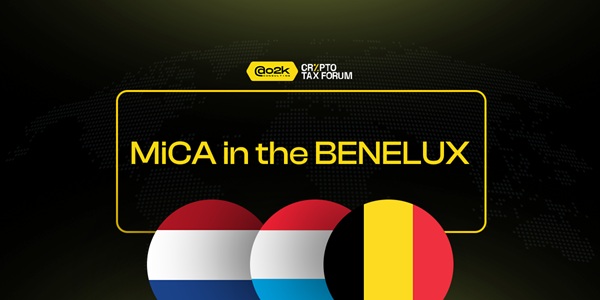
Below, we examine how Belgium, the Netherlands, and Ireland are implementing MiCA and what businesses should expect when operating in these increasingly important European markets.
Belgium:
Belgium entered a new phase of crypto regulation with the adoption of the Crypto Bill, which entered into force on 3 January 2026.
The legislation formally integrates MiCA into Belgian law and ends the previous framework under which firms operated as Virtual Asset Service Providers (VASPs). Going forward, crypto businesses must obtain CASP authorisation to provide services legally.
One of the most distinctive aspects of Belgium's approach is its supervisory structure. While MiCA generally encourages Member States to designate a single competent authority, Belgium has adopted a dual-supervision model involving both the Financial Services and Markets Authority (FSMA) and the National Bank of Belgium (NBB).
Responsibility is divided according to the type of crypto-asset involved:
- The NBB acts as the lead authority for Asset-Referenced Tokens (ARTs), while the FSMA oversees investor protection, white papers, and marketing communications.
- The NBB also supervises E-Money Tokens (EMTs), with limited involvement from the Federal Public Service Economy in specific consumer protection matters.
- For all other crypto-assets, the FSMA serves as the sole supervisory authority, overseeing public offerings, trading admissions, white papers, and marketing activities.
The Belgian transitional period runs until 1 July 2026. At the time of writing, KBC remains the country's first and only authorised CASP.
As authorisations increase, Belgium's dual-supervision model will provide an important test case for how multiple regulators can operate within a framework that was largely designed around a single supervisory authority.
Netherlands:
The Netherlands was one of the first EU countries to implement MiCA, issuing the bloc's first CASP licenses on December 30, 2024. Since our last update in Q3 2025, the country has expanded its tax transparency framework through DAC8 implementation and additional domestic reporting requirements. According to the PwC Global Crypto Tax Report 2026, the Netherlands is building a reporting infrastructure that goes beyond what EU law strictly requires.
Regulatory Status
The Netherlands was one of the first EU countries to implement MiCA, issuing the bloc's first CASP licenses on December 30, 2024. This made the Netherlands a frontrunner in CASP compliance and MiCA implementation across the EU, with the AFM and DNB overseeing the licensing process.
Tax Treatment
The Dutch tax treatment of crypto is still in transition, and that distinction matters. Right now, individual crypto holders are not taxed on what they actually earned but on a deemed return. Cryptocurrencies qualify as "other assets" under the Dutch wealth tax regime and are taxed on a deemed return of 5.88%, with a 36% tax rate applied to that figure.
In practice, this means tax can arise even when a holder has made a loss.
Dutch lower courts have ruled that both the historic and temporary wealth tax rules may violate property protection rights because tax can still arise even where losses occur. The government intends to move toward a system taxing actual realized and unrealized gains, currently targeted for 2027.
For corporate entities, income from crypto activities is taxed at 19% for profits up to €200,000 and 25.8% above that threshold. For individuals, crypto activity may either qualify as:
- Active business income: taxed at personal income tax rates up to 49.5%
- Wealth tax treatment: holdings above applicable thresholds fall under the Dutch wealth tax regime
Reporting Obligations
This is where the most significant near-term changes are happening. Following the EU's adoption of DAC8, the Dutch Ministry of Finance published a draft bill in October 2024 proposing amendments to the International Law Assistance in the Levying of Taxes Act. The bill was submitted to Parliament on July 7, 2025 and is expected to enter into force on January 1, 2026, with the first reporting deadline scheduled for January 31, 2027.
What makes the Dutch DAC8 reporting framework broader than the standard OECD CARF framework is its scope: unlike the OECD framework, the Dutch DAC8 implementation covers both domestic and cross border transactions, as well as both Dutch and foreign crypto users. The Ministry of Finance also proposed amendments to the General Tax Act making domestic crypto transaction reporting mandatory. In practice, Dutch crypto asset service providers will be required to collect and report significantly more data than the baseline EU standard requires.
VAT Treatment
Dutch tax authorities have not introduced formal crypto VAT legislation, but current guidance suggests that certain cryptocurrencies may qualify as means of payment, while some crypto related services may qualify for VAT exemption. NFTs are generally treated as services rather than goods for VAT purposes.
Key Changes Since 2025
The DAC8 implementation bill moving through Parliament is the headline development. It signals that the Netherlands is building a reporting infrastructure that goes beyond what EU law strictly requires, covering domestic transactions and foreign users alike. The wealth tax litigation also remains unresolved, and until the 2027 reform arrives, holders continue to face a regime that can produce tax liabilities even in loss-making years.
Ireland:
Ireland is now firmly beyond the MiCA transition phase.
The country opted for a 12-month transitional period, which ended on 29 December 2025. This means firms that previously operated under Ireland's VASP regime must now hold CASP authorisation under MiCA in order to continue providing services.
The Central Bank of Ireland serves as the competent authority and has adopted a structured approach to authorisation. The regulator has emphasised transparency, engagement with applicants, and a well-resourced review process designed to ensure firms meet MiCA's standards before receiving approval.
Importantly, Ireland is not positioning itself as a light-touch jurisdiction. The Central Bank's supervisory priorities continue to focus on governance, risk management, organisational culture, and accountability at senior management level.
For many firms, Ireland remains attractive due to its established financial services sector, strong international reputation, and English-speaking regulatory environment. However, businesses should expect thorough scrutiny and high compliance expectations throughout the licensing process.
In 2026, Ireland's MiCA framework is no longer about onboarding firms into a new regime. It is about ensuring authorised firms continue to meet the standards required to operate within it.
The DAC8 Factor
Across Belgium, the Netherlands, and Ireland, DAC8 is rapidly becoming as important as MiCA itself.
The framework introduces new obligations around tax residency collection, transaction reporting, customer identification, and information exchange between tax authorities.
For CASPs, this means compliance programmes must extend beyond licensing requirements. Businesses need systems capable of supporting both MiCA supervision and DAC8 reporting obligations.
The first reporting deadlines may still be months away, but regulators increasingly expect firms to begin preparing now.
Conclusion
Belgium, the Netherlands, and Ireland demonstrate that MiCA implementation is entering a new phase across Europe.
Belgium has introduced a unique dual-supervision model that divides responsibility between financial regulators. The Netherlands has moved quickly on licensing and is now building an expansive reporting infrastructure around DAC8. Ireland has completed its transition period and is focusing on governance, risk management, and supervisory quality.
For crypto businesses, the challenge is no longer understanding MiCA's legal requirements. It is navigating how those requirements are applied in practice. As licensing regimes mature and reporting obligations expand, firms that invest in governance, compliance, and operational resilience will be best positioned to benefit from Europe's increasingly regulated crypto market.
.svg)




.jpg)
.png)



.jpg)

.jpg)

.png)
.jpg)
.jpg)

.jpg)

.jpg)
.png)
.jpg)
.JPEG)
%20(1).jpg)
.png)



.jpg)

.jpg)
.jpg)

.png)

.png)





.png)











.jpeg)







.jpg)